John Deere D‑Series vs. E‑Series
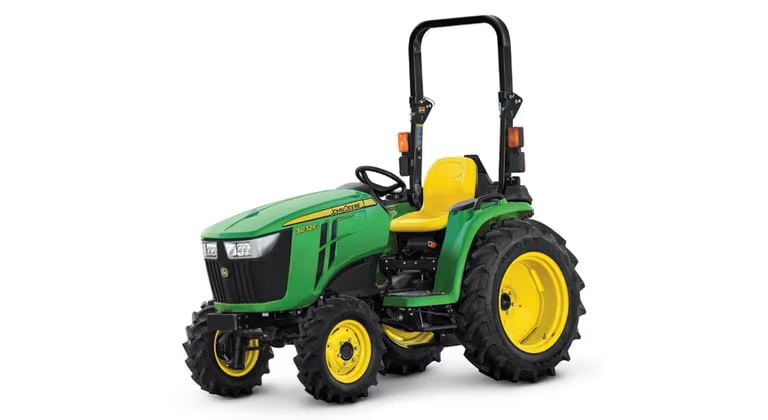
John Deere D‑Series vs. E‑Series: What is the Difference?
If you're comparing John Deere equipment, you’ve likely come across the D‑Series and the E‑Series — two lineups that look similar on the surface, but serve very different needs. When looking at John Deere D‑Series vs. E‑Series, it's important to know the features each offers. Whether you're shopping for a lawn tractor, compact utility tractor, or researching equipment for agricultural or property‑maintenance work, understanding the differences will help you choose confidently.
Below is a breakdown of how the D and E models compare, using verified public information.
1. Size & Intended Use
The D‑Series and E‑Series differ primarily in size, power, and the type of work they’re built for.
D‑Series: Smaller, Multi‑Utility Workhorses
- Designed for moderate farm work, property maintenance, and lighter-duty hauling.
- Ideal for landowners with smaller to mid‑size acreage.
- Typically offer 39–50 HP engines, providing dependable performance for routine tasks.
E‑Series: Larger, Heavy‑Duty Performance
- Built for heavier agricultural loads, larger implements, and tougher applications.
- Suited for bigger farms or users who need more strength and lift capacity.
- Typically offer 50–75+ HP, providing more torque and pulling ability.
- Includes models like the 5076E/5076EN, optimized for heavy-duty workloads.
2. Implements & Compatibility
D‑Series Implements
- Accepts a variety of attachments, but these tools are usually lighter to moderate duty.
- Great for mowing, light lifting, moving materials, or general property work.
- Implements tend to be smaller and weigh less.
E‑Series Implements
- Supports large, heavy-duty implements required for deep tilling, heavy soil work, and pulling wide agricultural tools.
- Designed for farmers who need higher capacity equipment day‑to‑day.
3. Power & Engine Differences
D‑Series Power
- Smaller engine options with horsepower typically around 39 HP for the lower end (e.g., the 5039D).
- Suitable for medium‑duty farm tasks.
E‑Series Power
- Larger engines ranging from 50 HP up to 92 HP, depending on the model.
- Example: The 5076EN has a 92‑horsepower turbocharged engine, designed for more demanding conditions.
4. Operator Comfort & Features
The E‑Series tends to offer more modern operator features:
D‑Series
- Straightforward, rugged, and functional.
- Good for buyers needing reliability without extra features.
- Earlier D‑models include basic improvements like RIO (Reverse Implement Option).
E‑Series
- More refined operator environment.
- Features such as tilt‑adjustable steering improve comfort and reduce fatigue.
- Provides multiple steering column positions for easier entry/exit.
5. Price & Positioning in the John Deere Lineup
John Deere organizes equipment similar to vehicle “trim levels.”
A helpful way to think about it from public discussions:
- D‑Series = Basic but capable
- E‑Series = Economy with upgrades
- M‑Series = Mid‑range
- R‑Series = Premium
The E‑Series is generally positioned above the D‑Series with additional strength, features, and versatility — but still affordable for farmers who want value without premium pricing.
Which One Should You Choose?
Choose D‑Series if you:
- Want a dependable, budget‑friendly tractor
- Are managing smaller acreage
- Need a machine for hauling, mowing, light tilling, or general chores
Choose E‑Series if you:
- Manage larger farms or heavier workloads
- Need more horsepower and torque
- Use heavy-duty implements regularly
- Prefer upgraded operator comfort features